Citizen App for public finance
- Project title
- COBU
- Target
- Conceptual project
- Status
- concept
- Year
- 2025
- Role
- Product strategist, UX/UI designer
- Skill
- public finance system, gamification, data vizualisation
Overview
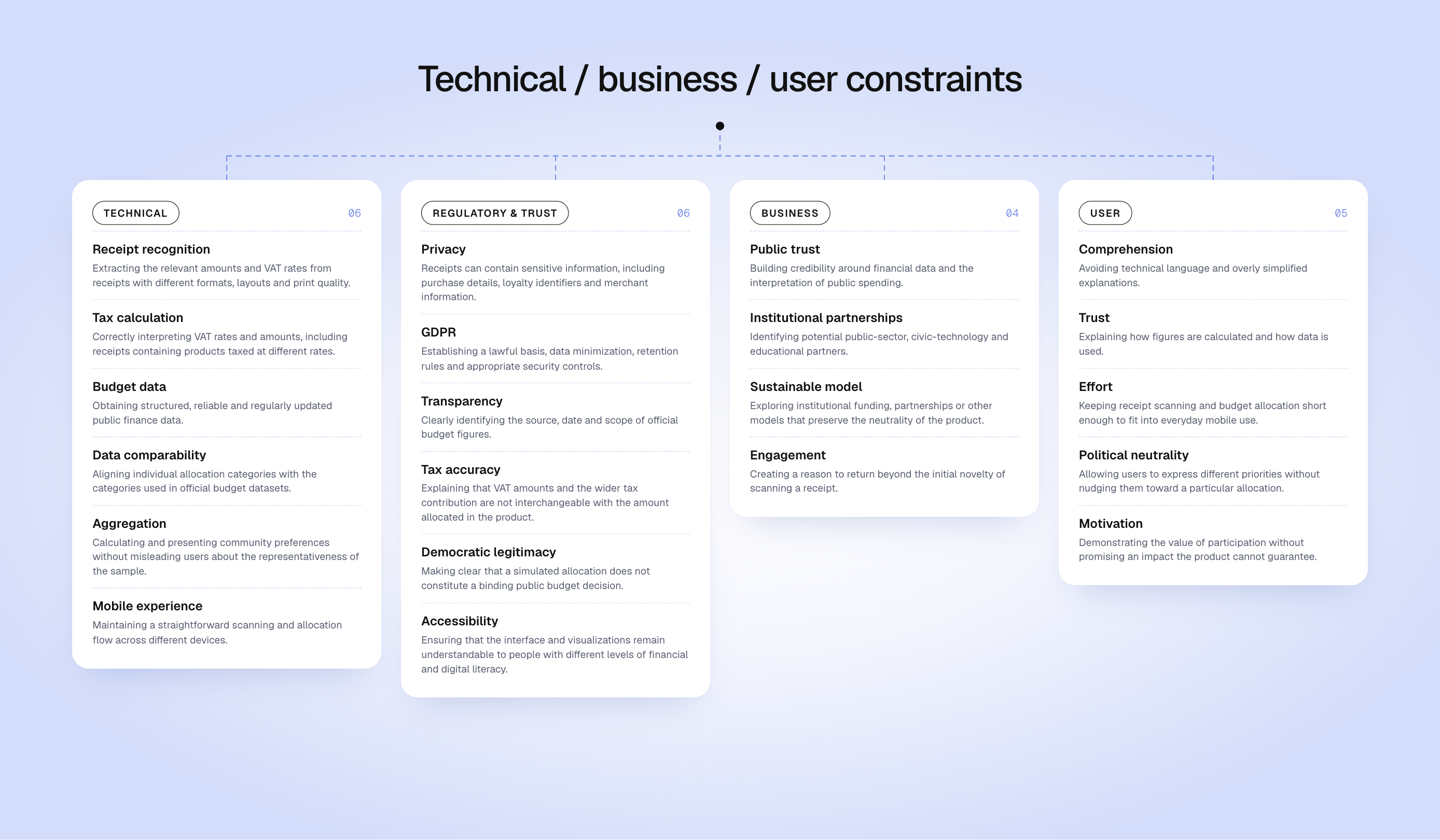
The common question in France : Why do we pay taxes without really knowing what they pay for?
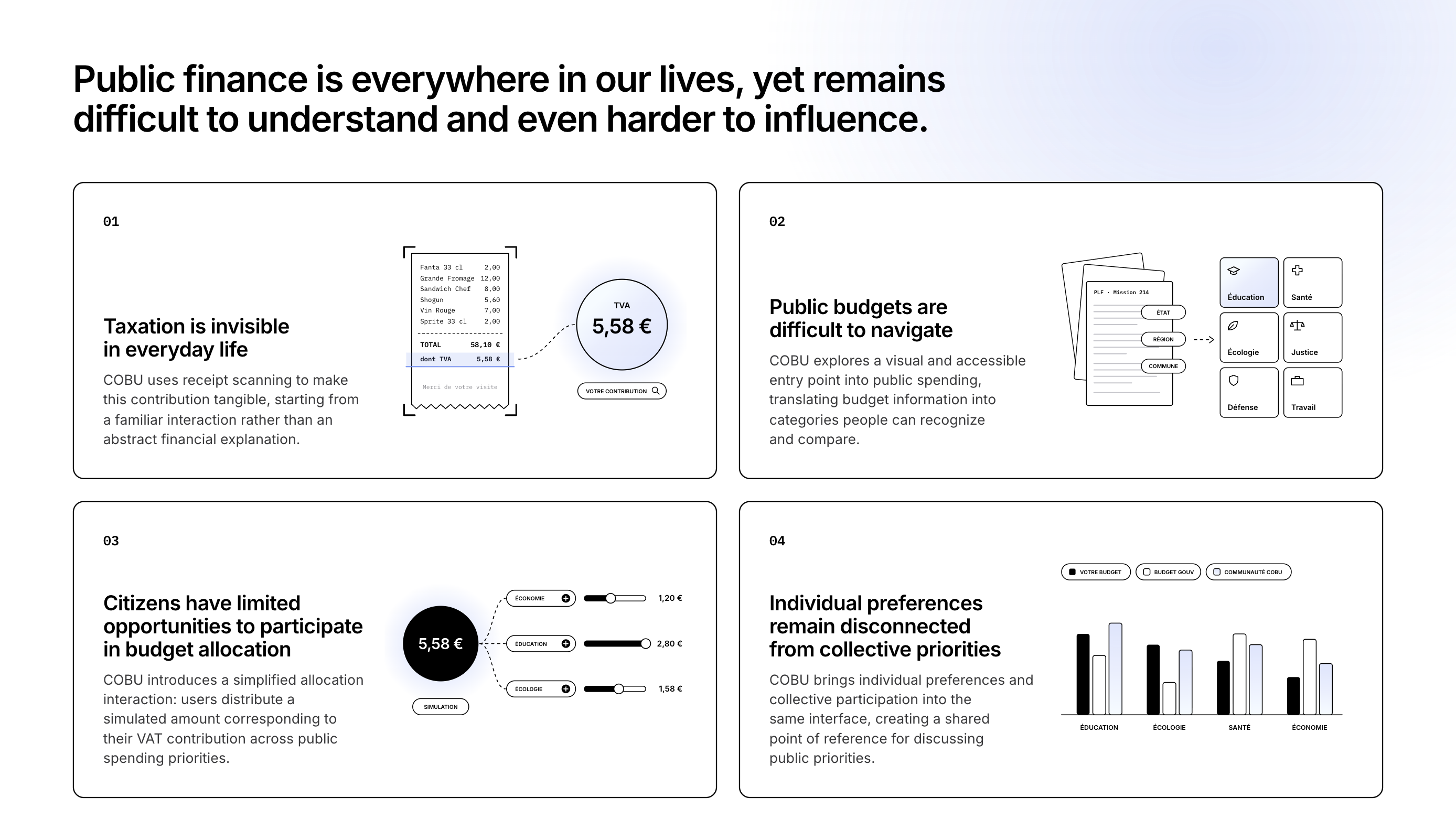
Every day, citizens contribute to public finances through income tax, VAT and other forms of taxation. Yet the relationship between what they pay and what the government spends remains difficult to understand. Public budgets are published through complex documents, administrative categories and financial reports. The information exists, but it is rarely accessible in a way that connects with everyday life. Citizens experience public spending through schools, hospitals, transport and public services. But they rarely see how their own contribution translates into these collective resources. The result is a disconnect between taxation, public spending and democratic participation.
VISION
You already contribute to public finances. What if you could understand where your money goes — and have a say in where it should go? The experience starts with something familiar: the VAT paid on an everyday purchase. By making this contribution visible and allowing users to distribute it across public spending priorities, COBU turns an abstract financial mechanism into an accessible civic experience. The ambition is to move from taxation as a passive transaction to public finance as a shared democratic subject.
PROBLEM
SOLUTION
COBU is a mobile-first civic technology concept that helps citizens understand and participate in public budgeting. The App combines financial transparency, participatory budgeting and civic engagement in one mobile experience.
Visualise
understand the amount of tax paid through everyday consumption and explore how public finances are allocated.
"Co-budget"
scan a receipt, identify the VAT paid and distribute that amount across selected public spending categories.
Compare
explore the relationship between personal priorities, government budget allocations and the collective preferences of the COBU community.
The product connects individual consumption to collective public choices through a simple, interactive experience.
KEY FEATURES
Make the invisible contribution visible
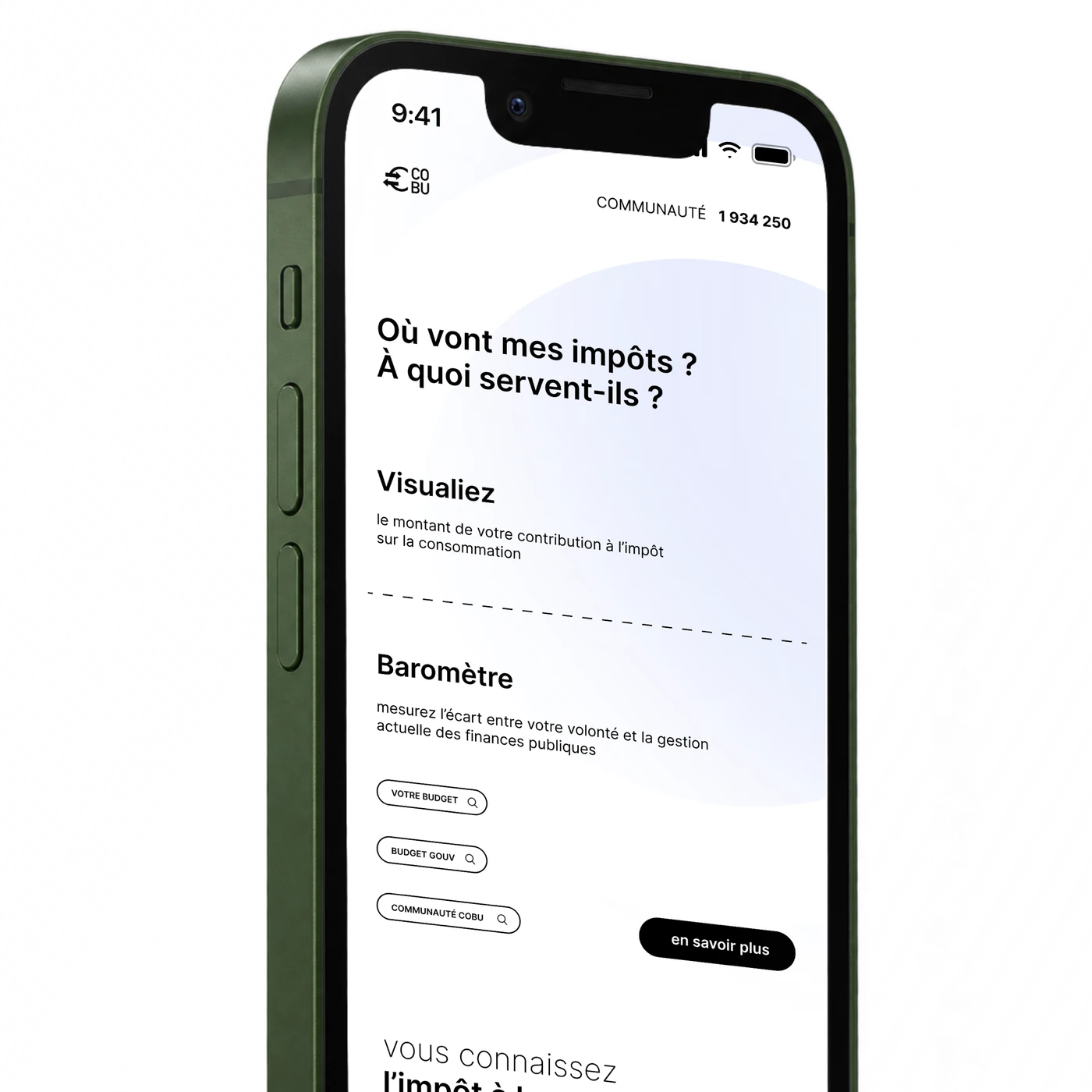
The home screen introduces the central question:
“Où vont mes impôts ? À quoi servent-ils ?”
Rather than starting with a financial dashboard, COBU invites users to understand their contribution through two complementary entry points:
- Your budget: explore the user's contribution and the way it relates to public finances.
- Government budget: discover how public funds are allocated.
- COBU community: compare individual priorities with the preferences expressed by the wider community.
The interface separates these entry points into short, recognizable actions, reducing the effort required to understand the product.
Turn an everyday receipt into a civic interaction
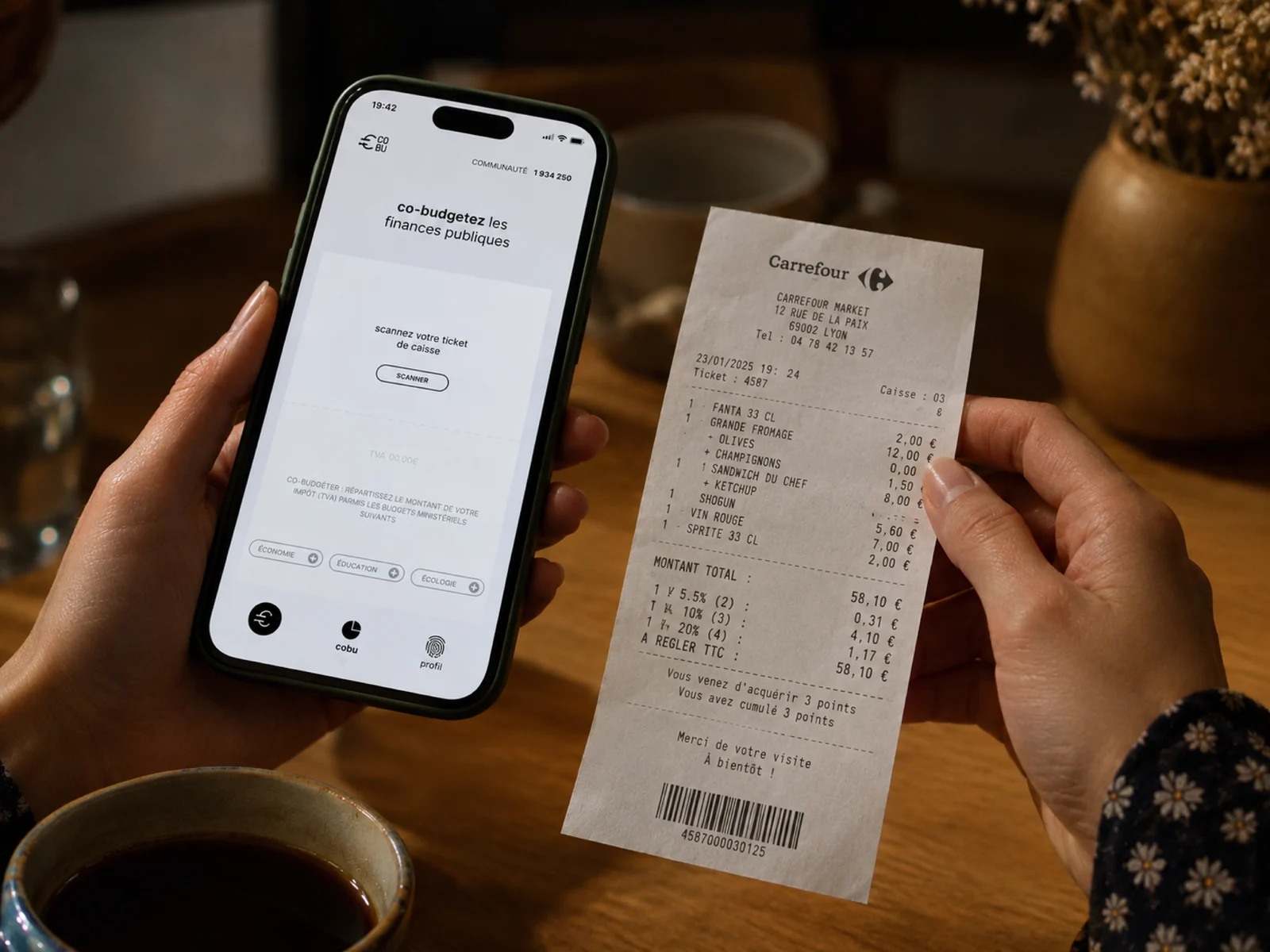
The co-budgeting experience begins with a familiar action:
scanning a shopping receipt.
The interface identifies the VAT amount and presents it as the starting point for a simplified allocation exercise.
Users can then distribute this amount across public spending categories, such as education, ecology and the economy.
The interaction reframes public budgeting as something users can actively explore rather than simply read about.
The receipt provides a concrete starting point; the allocation interface makes the subsequent decision tangible.
Understand the gap between personal preferences and public spending
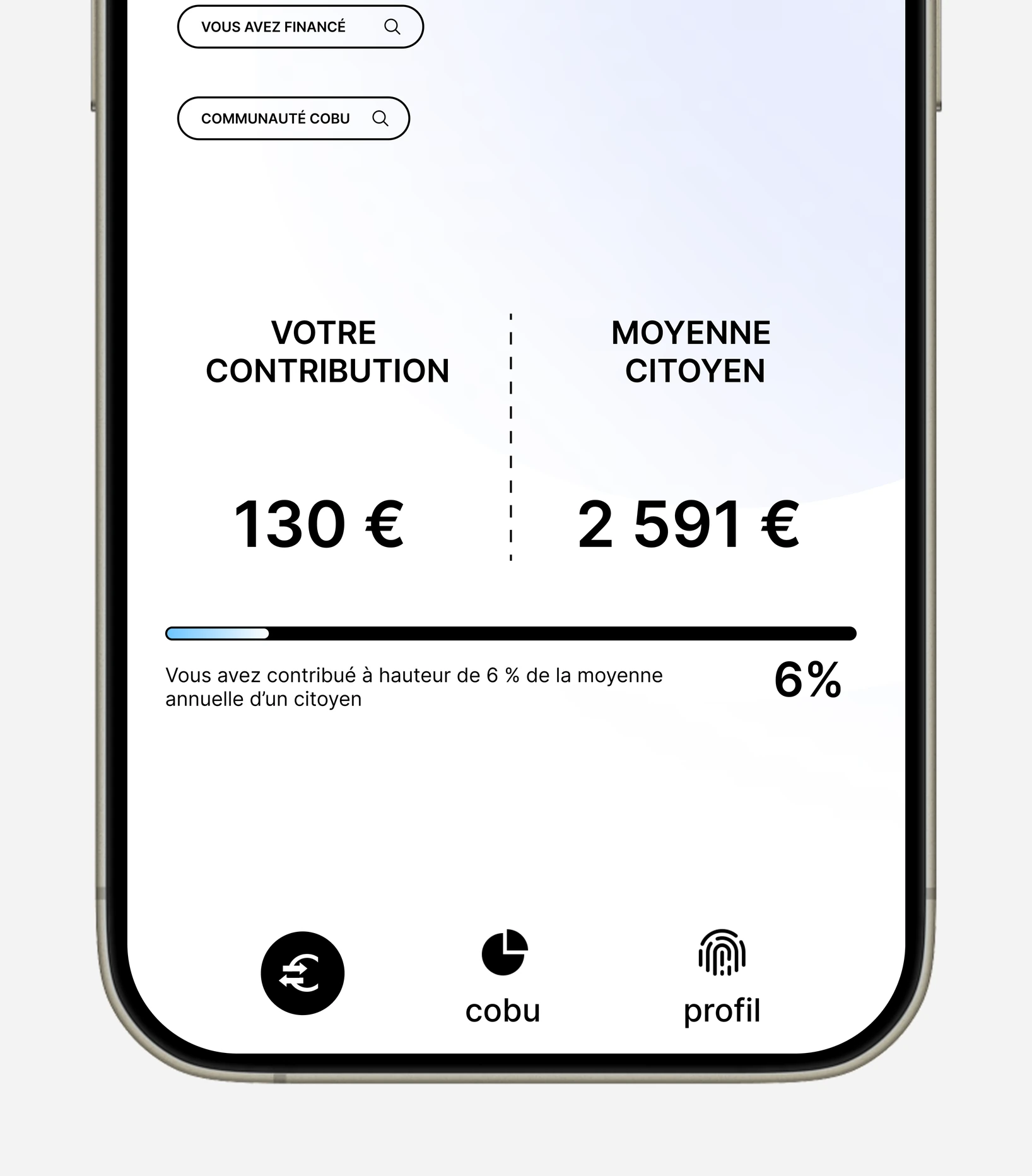
COBU introduces a barometer to explore the relationship between what citizens want and how public finances are currently managed.
Users can compare three perspectives:
- Your budget: the priorities expressed through their own allocation.
- Government budget: the distribution represented by official budget data.
- COBU community: the aggregated preferences of participating users.
This comparison creates an entry point for understanding where personal preferences align with or diverge from existing allocations.
The barometer is designed as a tool for comparison and reflection, rather than a score intended to judge individual political choices.
DESIGN DECISIONS
01 — Public finance is an abstract subject, while shopping receipts are familiar and concrete
The receipt-scanning experience provides a recognizable starting point and reduces the distance between an everyday purchase and the public revenue it generates.
02 — Reading about public spending does not necessarily encourage people to engage with it
Allowing users to distribute a simulated contribution across spending categories turns the experience into an active exploration of priorities.
03 — Personal preferences, official budget allocations and community preferences represent different types of information
The interface presents them as separate perspectives to make comparison possible without conflating a personal choice with a government decision.
04 — The product introduces a subject that can already feel complex
A restrained visual language, concise explanations and recognizable controls help keep attention on the information and the decisions being explored.
05 — A civic finance product depends on users understanding what its data represents
The product must distinguish actual VAT calculations, official budget figures, simulated allocations and aggregated community preferences. Data provenance, calculation methodology and update dates should be visible wherever relevant.
CONSTRAINTS